
US acts to stop China renting AI chips in Asian data centres
By Winston Su, Editor · · Add us as a preferred source on Google
At a glance
Treasury and the National Security Council directed a new US chip rule, which Bloomberg linked to scrutiny of export controls after an alleged espionage scandal involving NVIDIA.
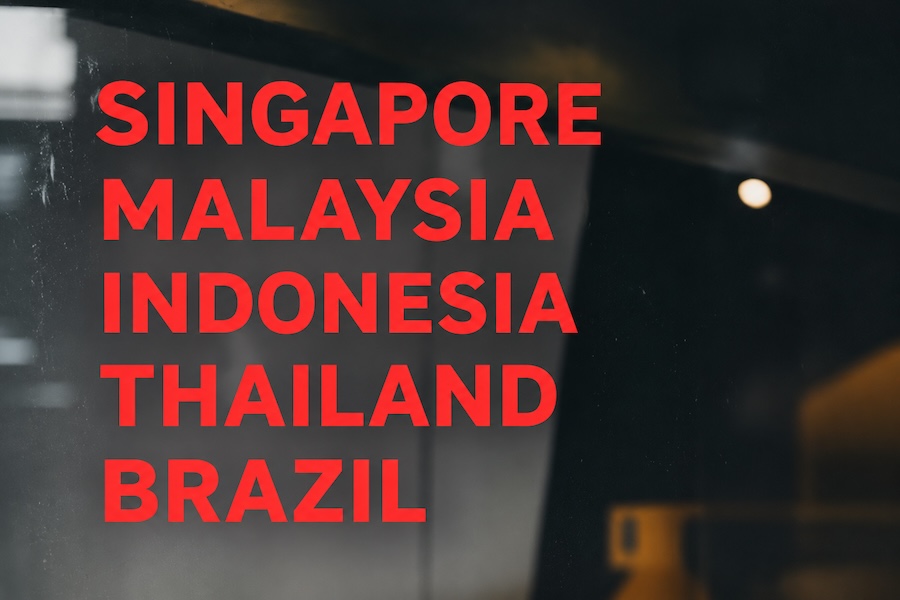
The rule requires licences for AI chips in any data centre serving China-headquartered companies above about 750 NVIDIA H100s, and for chips going to Singapore, Malaysia, Indonesia, Thailand and Brazil.
AirTrunk, NEXTDC and Firmus have campuses built or under way in Malaysia and Indonesia, where chips for non-US end users need case-by-case approval.
Non-US neoclouds such as Nebius and Nscale would need a US licence to install NVIDIA systems in Johor or Singapore unless a US-headquartered company receives or uses the chips.
Tokyo-listed Datasection, which planned a Sydney AI data centre, has booked a JPY2.75 billion loss after the owner of an overseas facility ended its contract.
The US Commerce Department has moved to stop Chinese companies renting American AI chips in data centres outside China. Its Bureau of Industry and Security (BIS), the department's export control arm, released an interim final rule on 16 November 2026, US time.
The push came from outside Commerce. BIS says the rule was "written by and at the direction of the Department of Treasury and the National Security Council." Bloomberg reported that the rule followed increased scrutiny of Washington's chip controls after an alleged espionage scandal involving NVIDIA. NVIDIA announced Jensen Huang's resignation on 12 November 2026, after reports of an affair with a former executive of Megaspeed, a Singapore cloud company under US investigation, which denies wrongdoing. Treasury Secretary Scott Bessent has said Treasury, State and Defense backed blacklisting Megaspeed for months, but the decision sat with Commerce.
The rule does two things. First, any data centre, anywhere, that rents large amounts of computing power to Chinese companies needs a US licence for its chips. The rule calls this remote access. Second, anyone selling advanced AI chips into Singapore, Malaysia, Indonesia, Thailand or Brazil needs a licence, because Washington rates them higher-risk countries. That second list covers Southeast Asian markets where AirTrunk, NEXTDC and Firmus have built or are building campuses. Chips for US cloud companies are excluded as long as the exporter reports to Washington every month.
BIS extends export controls to rented computing power
US export controls have long covered where chips are shipped, which left a Chinese company barred from buying NVIDIA's Blackwell processors largely free to rent them in an AI data centre in another country. The Financial Times reported in November 2025 that Alibaba and ByteDance were training models in Southeast Asian data centres leased from non-Chinese operators. Bloomberg has also reported that Alibaba gained access to NVIDIA chips in Malaysia through Megaspeed.
The rule takes effect when it is published in the Federal Register, and it formally rescinds the AI Diffusion Rule the Biden administration issued in January 2025. From then, a licence is needed for advanced chips going to any data centre that gives companies headquartered in China or Macau more than 12 million TPP, the US measure of chip processing power. The same applies to companies from the other US arms-embargoed countries in Country Group D:5. TechCrunch puts the threshold at about the computing power of 750 NVIDIA H100 or H200 chips. BIS reviews each application case by case.
Data centres currently serving those customers have 90 days from the rule's effective date to obtain a licence "or face future export restrictions". Foreign data centres are expected to check who owns and controls their customers. A data centre that cannot or will not give exporters that information is treated as a red flag. Access used only for commercial recommendation systems, such as those online retailers and social networks run, is excluded subject to reporting. BIS expects about 100 more licence applications a year.
Commerce adds chip licences for Singapore, Malaysia, Indonesia, Thailand and Brazil
The second part of the rule targets the five countries Washington rates as higher risk. Exports of advanced AI chips, and the servers built on them, to Indonesia, Malaysia, Singapore, Thailand and Brazil need a licence, reviewed case by case. Chips are excluded when the company receiving them or the company using them is headquartered in the United States or has a US parent, provided the exporter files monthly reports to BIS. Fortune named Microsoft, Oracle and Amazon as regional investors that should qualify.
The four Asian countries on the list carry large build pipelines. JPMorgan's July 2026 note puts the data centre pipeline through 2030 at 12.7GW in Malaysia, 5.8GW in Indonesia, 5.1GW in Thailand and 1.7GW in Singapore.
Singapore's trade and digital development ministries told Bloomberg they are studying the measure, and Indonesia's government said it is reviewing it with industry. Robert Walker, an economist at the Lowy Institute, a Sydney foreign policy think tank, told Bloomberg the curbs "would pose a major headwind to data centre investments in those countries". He singled out Singapore, Malaysia and Thailand.
AirTrunk, NEXTDC and Firmus have campuses in Malaysia and Indonesia
Australian-founded operators have committed large campuses in Malaysia and Indonesia, and AirTrunk and Firmus also run sites in Singapore. AirTrunk, founded in Sydney, said on 30 April 2026 that its four Johor campuses will carry more than 700MW of IT load. The first two, JHB1 and JHB2, are almost 100 per cent contracted to global cloud and AI customers. NEXTDC opened KL1 in Kuala Lumpur on 14 May 2026. Australian AI infrastructure company Firmus is co-developing a 360MW AI factory in Batam with Singapore's DayOne and has announced that OpenAI will contract compute from two of its Malaysian sites.
Operator and campus | Country | Capacity as published |
|---|---|---|
AirTrunk JHB1 to JHB4, Johor | Malaysia | More than 700MW of IT load |
Firmus and DayOne, Batam | Indonesia | 360MW, up to 170,000 NVIDIA GPUs |
NEXTDC KL1, Kuala Lumpur | Malaysia | 65MW of IT capacity |
Firmus, two sites for OpenAI | Malaysia | Not published |
Source: AirTrunk, 30 April 2026; Firmus, June and September 2026; NEXTDC, 14 May 2026.
AirTrunk and NEXTDC build and lease the buildings, and the chips belong to their tenants. Where those tenants are US cloud companies, chip shipments continue under the exclusion with monthly reporting. Chips for end users headquartered elsewhere, such as European neoclouds and Asian AI clouds, need a licence.
Nebius and Nscale would need licences for Johor and Singapore
Non-US neoclouds are among the companies that need that licence. CoreWeave, headquartered in the United States, qualifies for the exclusion in all five countries. That holds as long as its suppliers file the monthly reports. Chips for Amsterdam-based Nebius and London-based Nscale would need a US licence to go into Johor or Singapore unless a US-headquartered company receives or uses them. Chips for the same companies need no new licence to go into Sydney or Melbourne, provided the customers are not headquartered in China, Macau or another D:5 country, since the remote access provision applies to Australian data centres too.
The licence comes on top of higher costs in Singapore, where JPMorgan's July 2026 note puts rents at more than double Sydney's. Non-US AI clouds weighing Southeast Asian sites are likely to look harder at Australia, while US cloud companies can keep building in Johor under the exclusion.
Datasection books JPY2.75 billion loss on overseas facility contract
Tokyo-listed Datasection planned a Sydney AI data centre with 10,000 NVIDIA B300 chips, and Barron's reported in December 2025 that Tencent was a client of its data centres in Japan and Australia. Datasection's chief executive declined to confirm or deny it.
On 16 November 2026, Datasection announced a JPY2.75 billion lease termination loss after the owner of an overseas facility gave notice on 31 August that it was ending the contract. The boards of Datasection and its Australian subsidiary accepted the termination. Datasection said long negotiations with its customer over switching from B200 to B300 servers had delayed the facility's start, and it plans to seek a replacement site or compensation.
What to watch
Federal Register publication. The rule takes effect on the day it is published. That date starts the 90-day licence window for data centres serving China-headquartered customers and a 60-day comment period.
The first licence decisions. BIS reviews shipments to Singapore, Malaysia, Indonesia and Thailand for non-US end users case by case. The first approvals will show how long a licence takes to obtain.
Datasection's third-quarter results. Due around February 2027, they are the next place a replacement site or compensation would show up.
Congress. The Remote Access Security Act, which would give Commerce power to license and penalise foreign companies using US AI chips from abroad, passed the House of Representatives in January 2026 and awaits the Senate. Georgetown University analyst Hanna Dohmen told Fortune that several chip bills have been included in the 2027 National Defense Authorization Act.
More countries. The rule lets the Secretary of Commerce designate additional countries for the licence requirement, so the five-country list can grow.
Keep reading the market
Get The Strategic Brief in your inbox every Thursday.
The leading Australian data centre and AI infrastructure newsletter.
Your Next Read

Meta expands its Firmus deal from Melbourne into Southeast Asia

AirTrunk and NEXTDC are spending A$11 billion in Malaysia. Digital Realty just joined them.

Renewable Energy Construction Summit 2026 recap
Latest Headlines
Firmus seeks upfront payments from NVIDIA and Meta in A$4.4bn raise
17 Nov 2026Sharon AI misses on revenue as its price per megawatt climbs
17 Nov 2026IREN starts NSW approval for 900MW Wagga Wagga data centre
17 Nov 2026Jensen Huang eyes NVIDIA comeback as allies lobby the board
17 Nov 2026Tasmanian data centres would use 0.04% of TasWater's water
16 Nov 2026
Interested in reaching this audience? Advertise with us.