
Rene Haas: the Arm CEO in the frame to succeed Jensen Huang
By Winston Su, Editor · · Add us as a preferred source on Google
At a glance
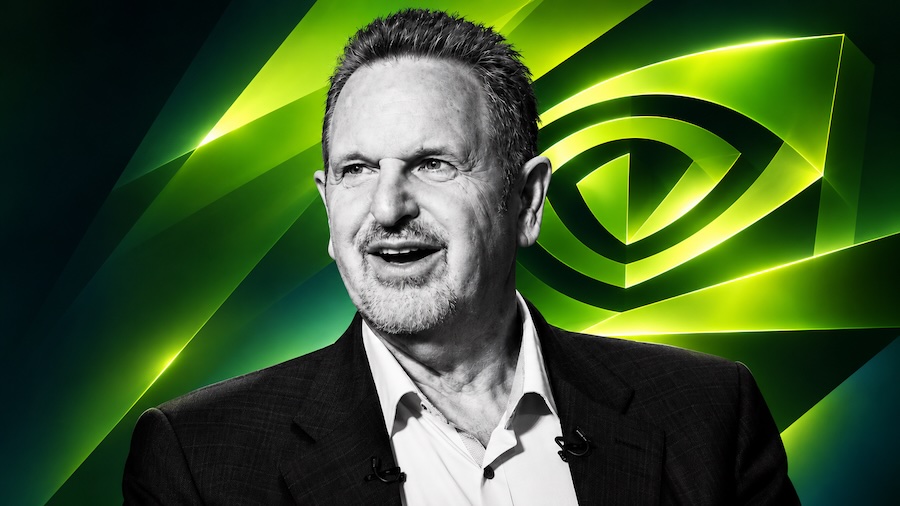
Rene Haas, the son of a child refugee from Nazi Germany, ran NVIDIA's computing products business for seven years and is now in the frame to succeed Jensen Huang.
NVIDIA's board has approached Haas, the Financial Times reported on 13 November, though the board says no candidate has been formally engaged.
Haas has run British chip designer Arm since 2022, took it public in 2023 and began selling its own data centre chip, with Meta as lead customer.
Sharon AI's 72MW agreement and Firmus's Melbourne contract cover NVIDIA GB300 racks carrying up to about 29,200 Arm-based Grace CPUs.
On 5 November Haas said the rest of the world is "ready and willing" to build data centres if the US hesitates.
Rene Haas, the son of a physicist who fled Nazi Germany as a child, spent seven years at NVIDIA before leaving in 2013 for British chip designer Arm, which he has run since 2022. The Financial Times reported on 13 November that NVIDIA's board had approached Haas about succeeding Jensen Huang. Huang resigned as chief executive on 12 November 2026, US time, after 33 years running the company he co-founded, following reports of an affair with a woman US officials believe is a Chinese intelligence asset.
Haas is one of several people under consideration, the newspaper said, and NVIDIA's board says it is still choosing an executive search firm and has not formally engaged any candidate. Inside NVIDIA, a long-time engineer's internal post urging the board to consider employee sentiment before acting drew more than 1,600 comments, several calling for Huang's return, Wired found.
NVIDIA supplies the chips behind Australia's AI builds and has invested in some of the companies building them, so its next chief executive inherits the decisions Huang made about both. The GB300 racks in Sharon AI's 72MW agreement and Firmus's Melbourne contract carry up to about 29,200 Grace CPUs built on Arm designs, and Haas, a former NVIDIA vice president, runs the company that designs them.
Haas grew up around Xerox and spent seven years at NVIDIA
Haas, 64, grew up in Webster, a suburb of Rochester in New York State, the eldest of three boys, he told the A Bit Personal podcast. His father was raised in Lisbon and became a physicist at Xerox, where he earned about 60 patents over his career. His mother, also from Lisbon, held a doctorate in Romance languages. On an early trip with his father, Haas visited Xerox's Palo Alto Research Center in the mid-1970s and saw a graphical interface and ethernet running before either was sold commercially, he told Stratechery in 2024.
He studied electrical engineering at Clarkson University, worked in engineering, product development and applications roles across the chip industry, and later held executive roles at chip designers Tensilica and Scintera Networks, Arm's biography shows. He joined NVIDIA in 2006 and left in 2013 as vice president and general manager of its computing products business. In 2024 he told the Financial Times that NVIDIA has "a very unique culture", built so that projects outrank management hierarchy, which he said gives it transparency and speed.
At Arm, which licenses processor designs to chipmakers including Apple, Qualcomm and NVIDIA, Haas held strategy, commercial, sales and marketing roles from 2013 and ran its IP products group, the division that licenses those designs, from 2017. His appointment as chief executive followed the collapse of NVIDIA's attempt to buy Arm. NVIDIA agreed in September 2020 to buy Arm from Japan's SoftBank in a deal valued at about US$40 billion, and the two abandoned it on 8 February 2022 because of "significant regulatory challenges", with NVIDIA keeping a 20-year Arm licence. Arm named Haas chief executive on 8 February 2022, succeeding Simon Segars.
Arm listed on Nasdaq and began selling its own chip under Haas
Haas then took Arm back to the public market. SoftBank sold 102.5 million Arm shares at US$51 each when Arm began trading on Nasdaq on 14 September 2023, and kept about 90 per cent of the company. Haas had asked for the listing to fall on that date, which would have been his father's 95th birthday. Arm has grown revenue by more than 20 per cent for three years in a row since going public, its fiscal 2026 shareholder letter says. Its data centre royalties doubled year on year in the September quarter.
On 24 March 2026 Haas launched the Arm AGI CPU, a data centre processor with up to 136 cores and the first chip Arm sells itself rather than licensing as a design. Meta co-developed it and is the lead customer, with OpenAI, Cloudflare and SAP among the launch customers. Arm's September quarter letter says it expects up to US$2 billion of AGI CPU revenue over the two years to March 2028, with first commercial deliveries due between January and March 2027.
The chip competes with processors sold by Arm's own licensees, NVIDIA among them. NVIDIA now offers its Vera CPU, built on Arm's instruction set, as a standalone processor as well as inside its AI racks.
SoftBank, which still controls Arm, widened Haas's role in April 2026, making him chief executive of SoftBank Group International to coordinate its chip and AI companies while he stays at Arm. He has sat on SoftBank Group's board since June 2023.
Arm designs the CPUs in Sharon AI's and Firmus's GB300 racks
Arm's designs also run inside the NVIDIA hardware Australian builders are buying. NVIDIA's GB300 NVL72, its rack for AI data centres, combines 72 Blackwell Ultra GPUs with 36 Grace CPUs, which NVIDIA describes as Arm-based. Each Grace CPU runs 72 cores of Arm's Neoverse V2 design and serves two GPUs.
Sharon AI's six-year agreement with NVIDIA covers up to 40,000 GB300 GPUs across 72MW in Australia. Firmus has about 18,400 GB300 GPUs at its Melbourne AI factory, where Meta is the customer. At one Grace CPU for every two GPUs, the two contracts carry up to about 29,200 Arm-based CPUs between them.
Australian contract | GB300 GPUs | Arm-based Grace CPUs |
|---|---|---|
Sharon AI, 72MW (NVIDIA agreement) | Up to 40,000 | Up to 20,000 |
Firmus, Melbourne (Meta) | About 18,400 | About 9,200 |
Total | Up to about 58,400 | Up to about 29,200 |
Source: NVIDIA, Sharon AI, Firmus. CPU counts are our calculation, at 36 Grace CPUs per 72-GPU GB300 NVL72 rack.
Haas says the rest of the world will build if the US hesitates
Haas has also spoken up for the build-out itself. On 5 November, as AI stocks fell following the US midterm elections, he told CNBC's Squawk on the Street that if the US hesitates on building data centres, "the rest of the world is ready and willing". He described post-election fears about data centres as short-term thinking.
In Australia, operators are hearing that interest from US technology companies directly. AirTrunk said in September that interest in Australia from Google, Apple, Meta, Amazon and Microsoft had run stronger than expected for six to eight months, citing political stability, renewable power and available land.
Under Haas, Arm has expanded in Asia too. In September 2025 Arm opened a new office in Bengaluru that will design 2-nanometre chips. In February 2026 Arm signed a partnership with Danantara Indonesia, the country's sovereign investment fund, at a London ceremony with Indonesian President Prabowo Subianto and Haas, giving Danantara access to Arm's designs through its Total Access programme and training local chip designers.
Analysts name NVIDIA insiders and rivals alongside Haas
The board's search has drawn names from inside and outside NVIDIA. Futurum Equities chief market strategist Shay Boloor told Reuters that Haas "wouldn't need to be brought up to speed on Nvidia", and that his knowledge of NVIDIA's culture combined with experience running a listed chip company was rare. Arm's shares, already lower on the day, closed down 4.6 per cent on 13 November, and Arm declined to comment.
Among NVIDIA's own executives, analysts point to chief financial officer Colette Kress, now interim chief executive, and Ian Buck, who led development of CUDA, the software that runs NVIDIA's AI chips. Outside it, they name AMD chief executive Lisa Su, Micron chief executive Sanjay Mehrotra, Marvell's Matt Murphy and Apple hardware chief Johny Srouji. US President Donald Trump has suggested former Apple chief executive Tim Cook. The board has called speculation about individual candidates, internal or external, premature.
What to watch
NVIDIA's results. NVIDIA reports its third-quarter results on 17 November, US time, with the call at 9am AEDT on 18 November, Kress's first as interim chief executive.
The search firm. The board has yet to appoint an executive search firm, the first step in its formal search. Kress runs NVIDIA until it names a permanent chief executive.
Arm's first chip deliveries. Arm expects its first commercial AGI CPU deliveries between January and March 2027. It has forecast December quarter revenue of about US$1.54 billion.
Keep reading the market
Get The Strategic Brief in your inbox every Thursday.
The leading Australian data centre and AI infrastructure newsletter.
Your Next Read

Jensen Huang eyes NVIDIA comeback as allies lobby the board
NVIDIA's Jensen Huang resigns: what it means for Australia
Jensen Huang says an AI gigawatt costs US$50bn
Latest Headlines
US acts to stop China renting AI chips in Asian data centres
17 Nov 2026Firmus seeks upfront payments from NVIDIA and Meta in A$4.4bn raise
17 Nov 2026Sharon AI misses on revenue as its price per megawatt climbs
17 Nov 2026IREN starts NSW approval for 900MW Wagga Wagga data centre
17 Nov 2026Tasmanian data centres would use 0.04% of TasWater's water
16 Nov 2026
Interested in reaching this audience? Advertise with us.