
NVIDIA halts AI server shipments to Southeast Asia, FT reports
By Winston Su, Editor · · Add us as a preferred source on Google

At a glance
NVIDIA has told its server partners to stop shipping servers built with its chips to Malaysia, Singapore, Thailand and Indonesia, according to a Financial Times report on 26 November 2026.
Dell and Supermicro have told buyers in the four markets that NVIDIA will not let their orders ship, and the FT's sources said it is unclear whether the halt is temporary.
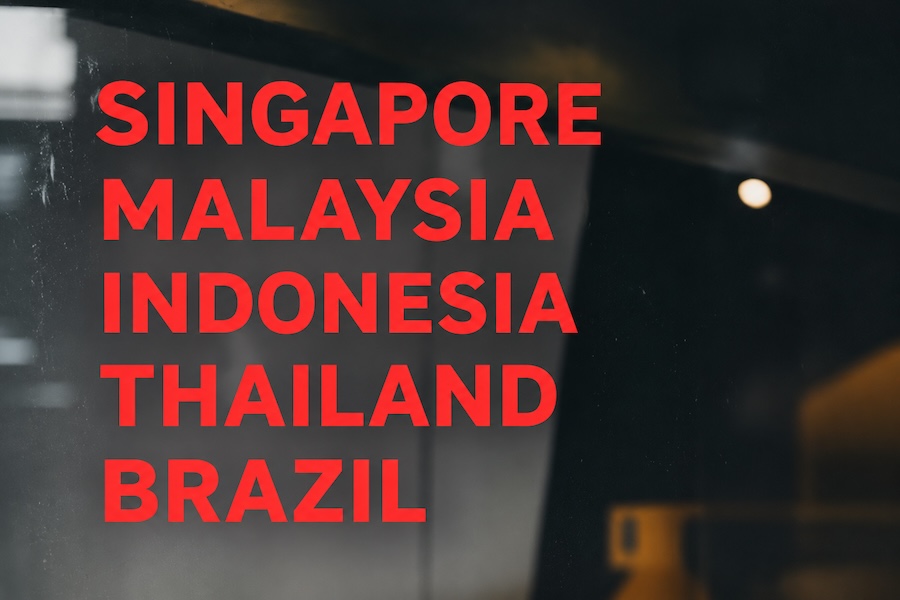
A US rule in force since 19 November requires a licence for advanced AI chips going to those four countries and Brazil, with an exemption for US-headquartered users.
Some lenders have stopped about US$500 million of credit for NVIDIA chips that Singapore's Aolani planned to run in Malaysia for TikTok owner ByteDance, the FT reports.
AirTrunk, NEXTDC and Firmus have campuses in Malaysia, Singapore and Indonesia. Australia sits outside the rule's country list.
NVIDIA has told the companies that build servers around its chips to stop shipping those servers to Malaysia, Singapore, Thailand and Indonesia, four of Southeast Asia's main data centre markets. Server makers including Dell and Supermicro have told buyers in those countries that NVIDIA will not allow their orders to ship, three people with knowledge of the matter told the Financial Times. NVIDIA declined to comment.
The halt follows a US rule, in force since 19 November, that requires a licence for advanced AI chips going to those four countries and Brazil. Chinese AI developers have turned to the four countries to reach NVIDIA chips they cannot buy at home, often by renting AI data centre capacity from local cloud companies. Server makers have told buyers in all four countries that NVIDIA will not let their orders ship, the FT reports, and NVIDIA and its partners are still working out how to comply with the rule. Australia sits outside the rule's country list, and three Australian-founded operators have campuses in three of the four markets.
Dell and Supermicro hold orders for Southeast Asian buyers
Dell and Supermicro package NVIDIA's processors into the servers that data centres install. According to the FT, NVIDIA and its partners are still working out how to comply with Washington's new controls, and its sources said it is unclear whether the halt is temporary.
The FT, citing company accounts, said NVIDIA booked US$104 billion of revenue through its Singapore subsidiary in 2025, up 72 per cent in a year, and that NVIDIA also books some of its Taiwan and China revenue through that unit. An executive at a cloud provider told the FT there is no guidance on how to apply for a licence while the 90 days the rule allows to obtain one run down. "It's causing sheer chaos in the region," the executive said.
Washington's rule covers four Southeast Asian markets and Chinese customers anywhere
The US Commerce Department's Bureau of Industry and Security, its export control arm, released the rule on 16 November, US time, and it has two parts. The first requires a licence, reviewed case by case, for advanced AI chips and the servers built on them going to Indonesia, Malaysia, Singapore, Thailand and Brazil. Chips are exempt when the company receiving or using them is headquartered in the United States or has a US parent, provided the exporter reports to Washington every month.
The second part applies in every country. A data centre that rents more than about 750 NVIDIA H100s' worth of computing power to companies headquartered in China needs a licence for its chips, unless the computing is used only for recommendation systems such as social media feeds, subject to reporting. Data centres serving those customers have 90 days, to 17 February 2027, to obtain one.
Commerce added seven companies in Malaysia, Singapore and Thailand to its Entity List, the US trade blacklist, on 23 November. They include Singapore cloud company Megaspeed, which is under US investigation over suspected diversion of NVIDIA chips to China and denies wrongdoing, and its Malaysian affiliate Speedmatrix.
Malaysia has told operators to follow the rule, and Singapore has said it will act against companies that use it to get around export controls. Singapore Prime Minister Lawrence Wong said on 17 November that his government can facilitate US checks on how advanced chips are used in Singapore. Malaysian trade minister Johari Abdul Ghani told operators on 18 November that "if you are not prepared to comply, then you should not operate in Malaysia".
Lenders stop about US$500 million of credit for Aolani's ByteDance chips
According to the FT, bankers who had agreed to finance Singapore cloud company Aolani's plan to supply computing power to ByteDance, the Chinese owner of TikTok, have stopped issuing credit worth about US$500 million, and ByteDance may drop the deal.
Bloomberg reported on 18 November that five lenders, led by DBS, were assessing a US$480 million loan to buy GPUs for a Malaysian data centre, with ByteDance the intended user of the chips. Aolani said it was working with regulators and lenders to keep the project in full compliance. The Wall Street Journal reported in March 2026 that ByteDance had arranged access to about 36,000 NVIDIA B200 processors in Malaysia through Aolani.
Property publication Green Street News reported on 25 November that ByteDance is also preparing a $15 billion data centre in regional Victoria, its first in Australia. If the campus goes ahead, a US licence would apply to NVIDIA chips ByteDance bought for it. Since November 2023, advanced NVIDIA chips sold to companies headquartered in China have needed one wherever the company installs them, a requirement the Bureau of Industry and Security restated in May 2026.
AirTrunk, NEXTDC and Firmus have campuses in Malaysia, Singapore and Indonesia
Three Australian-founded operators have built or committed capacity in three of the four markets, most of it in Malaysia's data centre corridor. AirTrunk has four campuses in Johor, the Malaysian state next to Singapore, planned to carry more than 700MW of IT load, and its first two are almost fully contracted to global cloud and AI customers. NEXTDC opened KL1 in Kuala Lumpur on 14 May 2026. Firmus is co-developing a 360MW AI data centre on Batam, an Indonesian island near Singapore, with Singapore data centre operator DayOne, and has announced that OpenAI will contract compute from two of its Malaysian sites. AirTrunk and Firmus also run sites in Singapore.
AirTrunk and NEXTDC build and lease the halls, and their tenants own the servers. Under the rule, servers received or used by US-headquartered companies qualify for the exemption with monthly reporting, and servers for other tenants need a licence reviewed case by case. Firmus's Malaysian customer OpenAI is headquartered in the US.
NVIDIA and Australian partners plan up to 2GW, outside the country list
For AI cloud companies choosing where to install NVIDIA servers in the region, the rule treats Southeast Asia and Australia differently. Servers bound for Australia need no country licence, while the separate licence for data centres renting computing to companies headquartered in China applies in Australia as it does everywhere. US GPU cloud CoreWeave qualifies for the exemption in all five listed countries. Chips for Amsterdam-based GPU cloud Nebius and London-based Nscale need a US licence to go into Johor or Singapore unless the end user is a US company, and no country licence to go into Sydney or Melbourne.
NVIDIA's third-quarter results named Australia as the only country in its data centre highlights, for a planned AI buildout of up to 2GW by 2027 with Australian partners. Through 2027, non-US GPU clouds weighing the region are likely to look harder at joining the neocloud providers in Australia, where new NVIDIA servers arrive without a country licence.
What to watch
The scope of the halt. Whether it covers orders for US-headquartered customers, whom the rule exempts, and when shipments to the four markets resume.
The first licences. Case-by-case decisions for non-US cloud companies in Malaysia, Singapore, Thailand and Indonesia will show how long approval takes.
The licence deadlines. Comments on the rule close on 19 January, and data centres renting computing to companies headquartered in China above the threshold have until 17 February 2027 to obtain licences.
ByteDance. Whether it keeps the Aolani arrangement, and whether it files a Foreign Investment Review Board application for the reported Victorian campus.
More countries. The rule lets the Secretary of Commerce require licences for more countries, by notice to exporters or by amending the regulations.
Keep reading the market
Get The Strategic Brief in your inbox every Thursday.
The leading Australian data centre and AI infrastructure newsletter.
Your Next Read

Southeast Asia steps up data centre oversight under US curbs
US acts to stop China renting AI chips in Asian data centres

Meta expands its Firmus deal from Melbourne into Southeast Asia
Latest Headlines
NT pitches itself as Australia's data centre gateway to Asia
25 Nov 2026Apprentice ratio proposed for data centre construction
25 Nov 2026350MW Mulwala data centre planned on solar farm land
25 Nov 2026ByteDance plans $15bn Victorian data centre, Green Street reports
25 Nov 2026Southern Cross Electrical wins A$120m in data centre and Metro work
24 Nov 2026
Interested in reaching this audience? Advertise with us.