
Sharon AI buys a closed Albury paper mill from Visy
By Winston Su, Editor · · Add us as a preferred source on Google
At a glance
- Sharon AI has bought the closed Ettamogah paper mill at Albury from the packaging group Visy, which stays on the site as a tenant.
- The company told The Border Mail it plans to return the under-used brownfield site to a running operation that benefits the local community.
- Price, site area and the eventual use are all still to be disclosed, and Albury council has no application before it.
- NSW data centre guidelines published on 17 August 2026 say industrial land with existing power and water, away from sensitive areas, carries fewer complications.
- Transgrid reported on 10 September 2026 that further Sydney capacity waits on a proposed transmission project due in the mid-2030s.
Visy has sold the Ettamogah paper mill to Sharon AI
Visy, the packaging and recycling group, has sold its Ettamogah paper mill at Albury to Sharon AI, the Nasdaq-listed Australian company that sells AI computing to businesses, researchers and governments from head offices in Sydney and New York. The Border Mail reported the sale on 9 September 2026.
Neither company has disclosed a price or a site area, and Sharon AI has not said what it will build there. A spokesperson said the company "plans to return the under-utilised brownfield site into a running operation that benefits the local community" and is "committed to building real world infrastructure throughout Australia, which creates jobs and a positive impact to local communities". The paper reported it would say more later and undertake community consultation. Visy stays on as a tenant, and its global logistics vice-president Craig Luxton said it will keep running warehousing and transport from the site.
Sharon AI reported 212MW of secured AI data centre capacity on 20 August 2026. Its Australian machines run inside Equinix and NEXTDC data halls. At Albury it owns the land.
What Sharon AI has bought
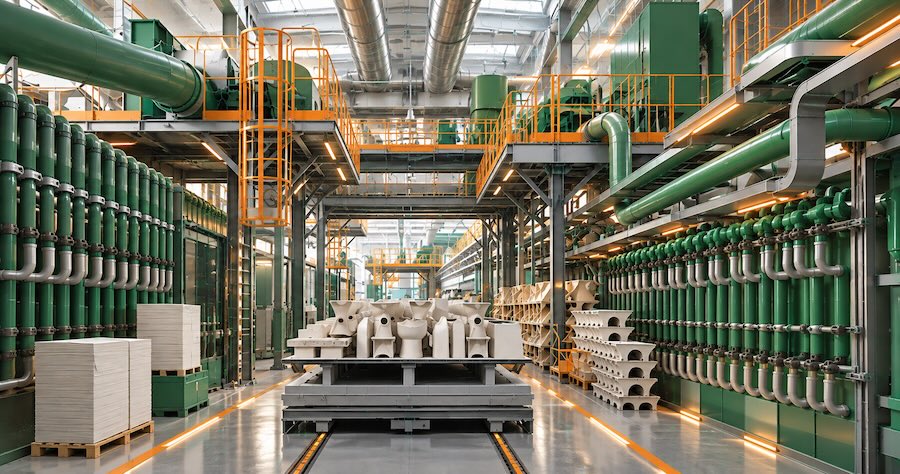
The site is on RW Henry Drive at Ettamogah, on the Hume Highway north of Albury, on the New South Wales side of the Victorian border. A newsprint machine ran there from 1981, first under Australian Newsprint Mills and then under Norske Skog, which took over in 2000. Norske Skog announced the closure on 3 October 2019, with 183 jobs going, and the last newsprint came off the machine that December. Visy bought the plant for $85 million and has run it as a warehouse and transport depot since taking it over in 2020.
That leaves a site zoned for heavy industry, connected for a load that once ran a paper machine, plumbed for water, and sitting well away from suburbs. The NSW guidelines describe that combination in almost those terms: consultation feedback, the document says, "identifies there are fewer complexities when data centres locate in brownfield sites with energy and water infrastructure capacity that are away from sensitive areas".
Albury already carries a data centre, though on a different scale. Leading Edge Data Centres has run a regional edge facility in the city since 2022, across 580 square metres.
What NSW will ask of the project
Whatever is proposed at Ettamogah will be assessed against guidelines the state published on 17 August 2026. A data centre above 15MW of electrical capacity runs as State Significant Development, the NSW planning pathway for large projects, which moves the decision from the council to the state. The guidelines then commit the state to an assessment process "taking no longer than 75 days in state government hands" for projects that address six principles and the 17 performance measures under them.
The supply obligations sit with the buyer. A project is expected to sign long-term contracts for new renewable generation in New South Wales, with a minimum 40 per cent wind component, backed by storage equal to at least a quarter of that generation's capacity, for four hours. It is also expected to show it can cut its grid draw by a quarter of forecast average load for up to two hours. A bill before the NSW parliament would let the energy minister declare an access scheme covering loads of 5MW and above, with the cost-recovery detail to follow in regulations.
The guidelines expect recycled water for 100 per cent of cooling wherever a water-intensive system is used, or a clear agreement with the water utility to transition to a rainfall-independent supply. Drinking water is allowed as an interim measure only where the developer negotiates a plan to fully offset it. On the network side the guidelines add that data centres outside the Sydney Ring, the transmission network around the city, "are expected to have smaller contribution obligations due to greater grid capacity in many locations".
| Guidelines measure | What it asks for | Where Ettamogah stands |
|---|---|---|
| Siting | Industrial land with power and water, away from sensitive areas | Closed newsprint mill on serviced industrial land |
| Water | Recycled or rainfall-independent supply for water-intensive cooling | Cooling design not disclosed |
| Energy | New NSW renewable generation under contract, 40% wind minimum | No connection enquiry made public |
| Network cost | Developer contributes to the network upgrades its connection triggers | Outside the Sydney Ring, where NSW expects smaller obligations in many locations |
Source: NSW Data Centre Guidelines, 17 August 2026; Transgrid; The Border Mail.
Transgrid reported on Sydney's capacity the day after the sale
Transgrid, which runs the high-voltage transmission network across New South Wales, has received 20GW of data centre connection enquiries over the past two years. Its connections page records more than 10GW of those since late 2024 within 12 kilometres of Sydney West alone, and says available capacity there "may soon be fully utilised by new connections".
Transgrid has signed agreements covering 1.5GW of new capacity and tied everything after that to Sydney Ring South, a proposed transmission project due in the mid-2030s. That came in its Transmission Annual Planning Report on 10 September 2026, the day after the Albury sale was reported. With targeted augmentations, the report said, regions including Wagga Wagga, the Hunter, Lithgow and south-west Sydney could offer large-load connection opportunities comparable to those in the Sydney region. Albury is not among them, and Wagga is the nearest that is.
Transgrid has separately argued that data centres should fund the grid capacity they unlock, so wherever a project connects, it pays for its own upgrade.
What Albury says
The Border Mail put the proposal to residents the day after it broke the sale. Table Top construction worker John Heathcote said he did not want the project and called the benefits an "incredibly short sugar hit". Bobbi McKibbin, who runs Solar Integrity at Yackandandah, raised electricity prices and the pull on local tradespeople, and asked "what happens if we have another decade-long drought?". David Farley, who won the federal seat of Farrer for One Nation at this year's by-election, said productive agricultural areas "are not the appropriate locations", called for "proven base load power such as coal, gas and nuclear", and said "securing water allocation will also be critical".
The paper also quoted Daswin de Silva of La Trobe University, saying AI data centres of that kind draw between 100MW and a gigawatt, and that closed-loop cooling recycles its water rather than consuming it. De Silva's range covers everything from a site the existing network could absorb to one that would need a new line built, and nothing has been proposed at Ettamogah yet.
Australian data centre proposals have drawn community objections on water, energy and consultation across five jurisdictions this year, in each case once an application was already before an authority. Sharon AI has lodged nothing and said it will consult first.
What to watch
The connection. The mill's historical electricity connection has never been published, and it is the figure that would tell an operator how much power Ettamogah can take. A registered enquiry with Transgrid would put a number on it, and Transgrid's network capacity allocation policy then governs how long an applicant can hold that capacity before it lapses.
The threshold. The electrical capacity in the first application decides who assesses it. Above 15MW the state does, under the 75-day commitment. Below that, a project worth more than $30 million goes to a regional planning panel, and a smaller one to Albury council.
The water timetable. Albury council bought 777 hectares from Visy east of the Hume Highway north of Albury in March 2025, for a wastewater treatment plant it has said would begin operating in the 2040s. That is a 2040s asset. A building switched on before then cools itself on whatever Albury's supply already allows.
The rest of the fleet. Sharon AI's six-year NVIDIA collaboration covers 72MW of new Australian capacity, and the company has not said where all of it goes. The directory of Australian data centres tracks where the rest of the market is building.
Keep reading the market
Get The Strategic Brief in your inbox every Thursday.
The Australian data centre week, every figure sourced.
Your Next Read
GreenSquareDC signs Sharon AI for 15MW over 10 years in Sydney
Sharon AI signs NVIDIA deal worth up to US$4.88 billion for 72MW in Australia

Sharon AI's 100MW target: where the extra 30 to 50MW lands across NEXTDC's network
Latest Headlines
NEXTDC renews its board and Scroggie forgoes FY27 bonuses
26 Oct 2026Anthropic in talks for a second US$45bn Nscale deal
23 Oct 2026Data centre construction costs: how Australia compares with Asia
23 Oct 2026NVIDIA says DSX POD can deploy AI factories in 14 days
22 Oct 2026Jensen Huang says an AI gigawatt costs US$50bn
22 Oct 2026
Interested in reaching this audience? Advertise with us.