About Ramboll
Ramboll is an engineering, design and consultancy group headquartered in Denmark and owned by the Ramboll Foundation rather than listed on a public market, a structure that gives it an unusually long planning horizon for a firm of its size. It supports data centres across the full lifecycle: site selection, mechanical, electrical and plumbing design, civil and structural engineering, technical due diligence, commissioning, and the environmental, health and social impact work that surrounds a major build.
The data centre practice has scaled quickly. In the Asia Pacific it runs offices across Australia, Singapore, Malaysia, Japan, India, South Korea, Hong Kong and the UAE, which lets it benchmark Australian projects against the wider regional market.
Ramboll does not name its data centre clients, citing confidentiality, but the public record shows the shape of the book. The firm delivers MEP design across the region for hyperscale, colocation, modular and edge deployments, has been the primary environmental, health and safety adviser to a global colocation developer and operator since 2015 across North America, Europe and Asia, and has provided civil, structural and geotechnical engineering for a hyperscale facility with more than 110MW of IT capacity. Recent APAC work includes technical due diligence and site investigation for a data centre in Malaysia, and in the UK the firm handled the environmental and planning work to bring the Langley Business Park site near London into the data centre pipeline.
Zulkifli Salleh is Managing Principal of Ramboll's Environment and Health team in Southeast Asia and its APAC Data Center Lead. He advises operators on carbon, water and the sustainability performance that increasingly governs approvals and capital, and he put the following to Certified Strategic on where the Australian market is heading.
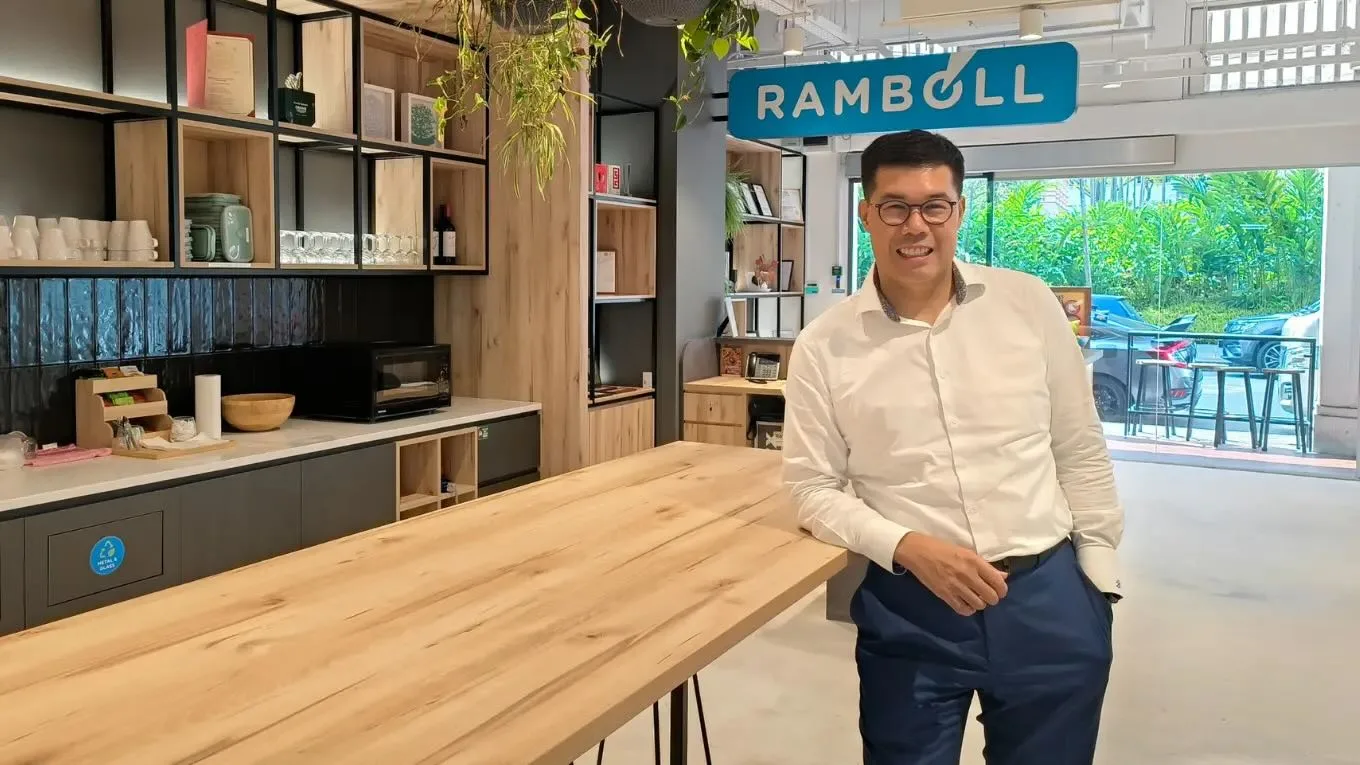
Zulkifli Salleh, Ramboll's APAC Data Center Lead. Image: Ramboll
Q&A with Zulkifli Salleh, Ramboll's APAC Data Center Lead
What follows is Salleh's written contribution to Certified Strategic, published as submitted. His answers appear in quotes; our independent analysis follows where useful.
Q: Rising AI rack densities are pushing everyone toward liquid cooling. How should operators weigh the trade-off between energy and water, especially in a drier climate like Australia's?
"Rising AI rack densities are accelerating the shift toward liquid cooling. Liquid cooling offers significant thermal advantages over traditional air-cooling systems, but its sustainability benefits depend heavily on how the cooling system is designed.
Not all liquid cooling solutions reduce water consumption. Facilities that continue to rely on evaporative heat rejection may effectively shift where water is used rather than eliminating demand altogether. By contrast, dry-cooled systems can significantly reduce onsite water use but often require additional energy. In water-stressed catchments, closed-loop and dry-cooled designs are increasingly viewed as the more resilient long-term option, even where there may be an energy trade-off. This highlights a broader reality: cooling decisions are becoming an increasingly important part of both sustainability and infrastructure planning."
Q: You lead Ramboll's data centre work across APAC. What stands out about the Australian market compared with the rest of the region?
"Australia's data centre sector has entered a new phase of growth. In the major markets, demand is increasingly running ahead of deliverable new supply, and competition for power, water and grid connections is intensifying. Unlike earlier-stage APAC markets that are still focused primarily on land acquisition and capacity expansion, Australia's growth is increasingly constrained by infrastructure availability, utility access and delivery timelines rather than land alone.
Project scale is evolving as well. Sydney remains Australia's only Tier 1 data centre market and accounts for the majority of the country's built-out capacity, with hyperscale operators driving much of the new demand. Market forecasts now point to Sydney's development pipeline reaching double-digit gigawatts, although a significant share remains early-stage rather than committed capacity. From Western Sydney to proposed large-scale data centre developments near Darwin, projects are increasingly being discussed in gigawatt terms. At the same time, forecasts suggest only a portion of today's announced pipeline is likely to become operational by 2030, highlighting the growing gap between ambition and deliverability. As a result, power access, water security and planning approvals are becoming as central to site selection as land availability."
CS Analysis: On the proposed developments near Darwin, the gigawatt language is proponent framing on early-stage sites. We treat the headline pipeline as a claim to test rather than an audited number.
Q: Beyond a headline WUE number, what does genuinely good water management look like on a data centre project?
"Water Usage Effectiveness (WUE) remains a valuable metric, but it only tells part of the story. It does not distinguish between potable and recycled water sources, nor does it fully reflect the resilience of a facility's water supply.
Leading operators are increasingly focusing on broader measures of water stewardship, including:
Securing recycled or non-potable water sources where feasible.
Understanding peak water demand, not just annual averages.
Planning ahead for AI-driven increases in future water and power requirements.
Engaging early with communities, First Nations groups and regulators on catchment-level impacts.
This direction is increasingly reinforced by policy. In March 2026, the Australian Government released its Expectations of Data Centres and AI Infrastructure Developers, setting out national expectations covering energy, water, social licence and local capability. On water, the guidance encourages early engagement with utilities and communities, efficient cooling technologies, secure water sourcing, greater use of non-potable water where possible, and transparent reporting. Separately, industry and water-sector stakeholders have called for governments to consider minimum WUE and PUE standards for new facilities as part of broader efforts to improve resource efficiency."
Q: How are AI workloads changing the way facilities are designed and delivered?
"AI workloads are changing how facilities are designed and delivered. Higher rack densities are pushing traditional cooling systems toward their practical limits, and cooling decisions made early in the development process can be difficult and costly to reverse later.
As a result, power, water and cooling strategies are increasingly being considered together from the earliest stages of site selection and design. Developers are placing greater emphasis on utility availability and long-term infrastructure constraints before committing to locations. Many operators are also moving toward hybrid cooling approaches that provide greater flexibility as technology evolves.
In many markets, utility access and grid-connection constraints are now among the most significant project risks, alongside construction costs and workforce availability. As AI adoption accelerates, these infrastructure considerations are becoming critical determinants of which projects ultimately move from concept to operation."
Q: You have argued sustainability is becoming a commercial advantage rather than a compliance cost. Where is that showing up for data centres?
"Sustainability is increasingly shifting from a compliance requirement to a source of competitive advantage. Investors, lenders and customers are paying closer attention to environmental and social performance as indicators of long-term asset resilience and investment quality.
Projects that can demonstrate responsible water management, strong stakeholder engagement and a credible sustainability strategy are likely to be better positioned in approval, stakeholder and capital processes. Governments are also placing greater emphasis on social licence, energy performance and responsible resource use when assessing major projects."
Q: What is the key takeaway for developers navigating this?
"In an increasingly constrained market, sustainability is no longer simply a reporting exercise. It is becoming a strategic factor that can influence access to infrastructure, investment and long-term growth. Australia's data centre market is no longer defined simply by growth. Success will increasingly depend on how developers balance AI-driven demand with the realities of power availability, water stewardship and community expectations."
What this means for operators and investors
The projects that clear approval and secure capital fastest are increasingly the ones that can answer power, water and grid questions early, and the national expectations have now written those questions into the way the Australian Government prioritises major proposals for Commonwealth regulatory assessment.
The sharpest practical point is on cooling. Salleh makes a well-supported case that liquid cooling does not automatically save water, and where that holds, the water-for-energy trade-off in a dry catchment becomes a design decision that is hard to unwind once a facility is built. For developers weighing Western Sydney sites or the gigawatt precincts now being floated, that is a due-diligence question worth asking before land is committed.
Key takeaways
Ramboll's APAC Data Center Lead Zulkifli Salleh says liquid cooling does not automatically save water.
Facilities that use evaporative heat rejection can shift where water is used rather than cut it, while dry-cooled designs save water but often draw more energy.
In water-stressed catchments, Ramboll views closed-loop and dry-cooled designs as the more resilient long-term choice despite the energy trade-off.
Salleh argues Australia's binding constraint has moved from land to power, water and grid access, with only part of the announced pipeline deliverable by 2030.
The March 2026 national expectations make water, energy and social licence explicit expectations that shape which proposals the Commonwealth prioritises.